
First Aid Level 1 to 3
CPR, wound care and workplace injury management with accredited certification.
Law requires a trained first aider on site based on headcount and risk. Our Level 1 to 3 programme lets you put basic cover in place quickly and build advanced depth in the people who need it.
Why this training matters
In an office, an ambulance is usually minutes away. On a mine, a plant or a construction site it is often a great deal longer, and the injuries are heavier. Crush injuries, serious bleeding, burns and falls do not wait for professional help to arrive.
That gap between the injury and the paramedic is the whole reason the law wants trained people on site. Someone who can manage an airway, stop a bleed and keep a casualty stable is not a substitute for emergency services. They are the reason the casualty is still in a condition to benefit from them.
Building depth matters as much as meeting the number. A single first aider who is on leave, on night shift or off sick is not cover. We usually recommend spreading trained people across shifts and areas rather than concentrating them in one department.
What you will learn
- Emergency scene management and personal protection
- Primary survey, CPR, choking and the recovery position
- Bleeding control, shock, burns, wounds and fractures
- Secondary survey and patient handling (Level 2)
- Medical emergencies: diabetes, epilepsy, asthma and heat illness (Level 2)
- Advanced trauma management and oxygen administration (Level 3)
- Multiple casualty triage principles (Level 3)
- First aid box contents, records and injury on duty reports
The legal requirement
First aid is one of the few areas where South African law puts an actual number on it. Regulation 3 of the General Safety Regulations, made under the Occupational Health and Safety Act, sets the requirement.
Where more than five employees are employed at a workplace, the employer must provide a first aid box, or boxes, at or near the workplace, available and accessible for treating injured people. Where more than ten employees are employed, the employer must ensure that for every group of up to 50 employees, at least one person is readily available during normal working hours who holds a valid certificate of competency in first aid. In shops and offices that group size is up to 100 employees.
The phrase that matters in practice is "valid certificate of competency". The certificate has to come from a body recognised for the purpose, and it has to be current. Our programme is accredited with HWSETA and the Department of Labour, and the certificate is valid for two years, so it satisfies both halves of that requirement.
Note that these are minimum numbers, not target numbers. An operation with a higher injury risk, remote working areas or long travel times to a hospital should be training well above the ratio, and your own risk assessment is what drives that.
Sources
- General Safety Regulations, Department of Employment and Labour
- Occupational Health and Safety Act 85 of 1993, Department of Employment and Labour
Legislation is summarised for orientation and is not legal advice. Always check the current text of the Act and its regulations, or take advice.
Practical assessment
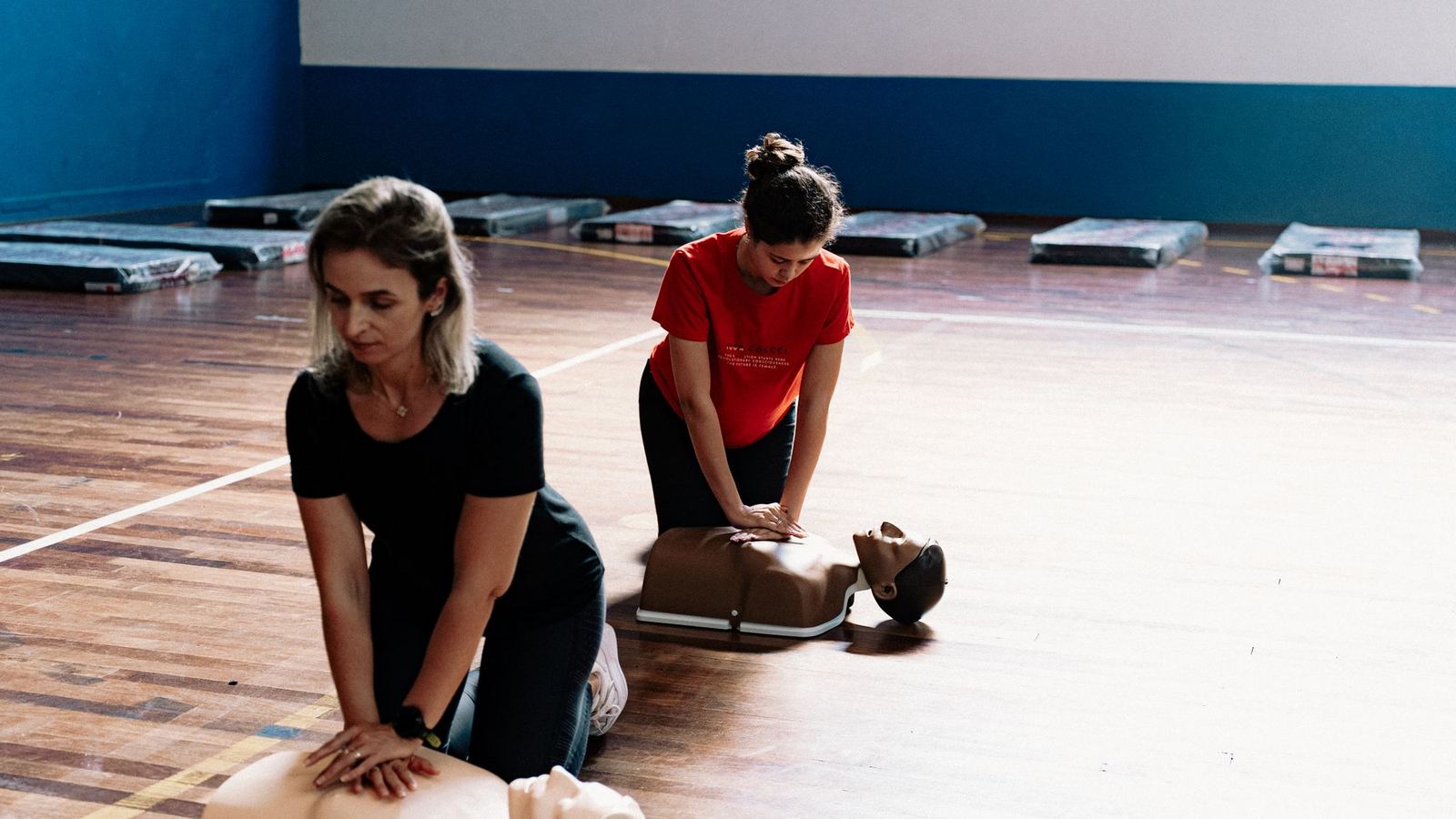
Continuous practical assessment across the intake, plus scenario work. Delegates perform CPR on a manikin, manage bleeding, burns and fractures on live subjects, and are assessed running a scene rather than reciting steps from the manual.
Prerequisites
None for Level 1. Level 2 requires a valid Level 1 certificate, and Level 3 requires a valid Level 2. The five-day combined intake takes a delegate with no prior first aid training through to Level 3.
What is included
- CPR manikins and first aid kits
- Training manual
- Practical assessment
- Accredited certificate
Certification
Delegates who complete the programme and are found competent receive the HWSETA and Department of Labour accredited certificate, plus IMJ certificate, valid for 2 years. Attendance registers and assessment records are handed over to your health and safety department for the training file.
Refresher and re-certification intakes are available before a certificate lapses. Tell us the expiry dates and we will schedule around them.
First Aid Level 1 to 3 questions
Under General Safety Regulation 3, if you employ more than ten people you need at least one person holding a valid first aid certificate readily available during working hours for every group of up to 50 employees, or up to 100 in a shop or office. If you employ more than five people you also need a first aid box. Higher risk operations should train above that minimum.
Level 1 satisfies the legal minimum for most workplaces. Level 2 suits sites with higher injury risk or longer distances to help. Level 3 is for teams who may have to manage serious trauma, administer oxygen or triage more than one casualty before help arrives.
Yes. The programme is accredited with HWSETA and the Department of Labour, which is what Regulation 3 means by a valid certificate of competency. Delegates also receive an IMJ certificate. Both are valid for two years.
Yes. CPR manikins, training first aid kits and all consumables come with the facilitator. You provide a room with space to work on the floor.
Yes. Staff, contractors and unemployed individuals can sit the same intake and receive the same accredited certificate. Group discounts apply.
Book first aid training
Send us the courses, the number of delegates and where you are. We come back with a written quote within one business day.