
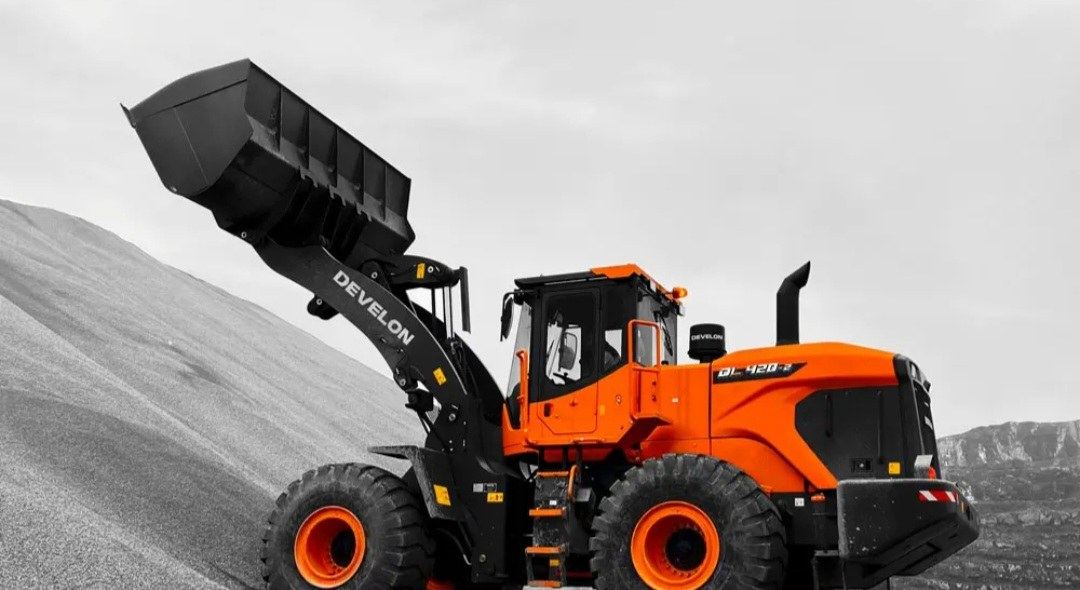
Front End Loader
Operation, bucket control, loading and safety on site.
A front end loader is a production machine. Learn machine controls, bucket operations, stockpile management and the safe loading of trucks.
Why this training matters
A front end loader is judged on production, and that is exactly what makes it dangerous. The pressure is to fill the truck, keep the hopper fed and clear the face, and the shortcuts that follow are predictable: travelling with the bucket too high, cutting into a stockpile face that is above safe reach, working across a slope instead of up and down it.
Stockpile work deserves particular attention. Undercutting a face leaves overhanging material that can collapse onto the cab without warning, and a machine parked at the toe of a badly managed pile is in the worst possible position. V-drain and stockpile discipline is not housekeeping, it is what stops the pile arriving on top of the operator.
The other recurring incident is the interaction with trucks. Loading a haul truck puts a large machine, a swinging bucket and a driver in a cab into the same few metres, repeatedly, all shift. Positioning, spotting and an agreed sequence are what keep that routine instead of eventful.
What you will learn
- Machine components and controls
- Pre-start checks
- Bucket handling and crowd control
- Loading trucks and hoppers safely
- Stockpile and V-drain management
- Working on slopes and uneven ground
- Parking and shutdown
The legal requirement
A front end loader is construction vehicle and mobile plant, which puts it under regulation 23 of the Construction Regulations, 2014.
Regulation 23 requires that operators have received the required training, are certified competent, and hold proof of competency authorising them in writing to operate that plant. It also requires the operator to hold a medical certificate of fitness issued by an occupational health practitioner, and to inspect the vehicle daily.
The regulation also puts duties on the contractor: construction vehicles and mobile plant must be of acceptable design and construction, maintained in good working order, and fitted with structures designed to protect the operator from being crushed if the machine overturns or from falling material.
On a mine, the Mine Health and Safety Act 29 of 1996 applies alongside this, and the employer carries its own duty to train employees for the work they do. Either way the pattern is the same: trained, assessed, medically fit, authorised in writing, and inspecting the machine before the shift. Our licence and the records that come with it are what let you show all of that.
Sources
- Construction Regulations, 2014, Department of Employment and Labour
- Occupational Health and Safety Act 85 of 1993, Department of Employment and Labour
Legislation is summarised for orientation and is not legal advice. Always check the current text of the Act and its regulations, or take advice.
Practical assessment
A theory paper on controls, stability and legal duties, then five days of observed operation. The practical covers the daily inspection, bucket and crowd control, loading a truck and a hopper, stockpile and V-drain work, operating on a slope, and correct park-up and shutdown.
Prerequisites
Delegates must hold a valid medical certificate of fitness, as regulation 23 requires, and be able to follow the assessment in the language of instruction. Existing operators should bring their current licence.
What is included
- FEL machine for the practical
- Training manual
- Licence card
Certification
Delegates who complete the programme and are found competent receive the CETA and TETA aligned licence, valid for 2 years. Attendance registers and assessment records are handed over to your health and safety department for the training file.
Refresher and re-certification intakes are available before a certificate lapses. Tell us the expiry dates and we will schedule around them.
Front End Loader questions
We train on yours wherever possible. Loaders differ enough between makes and sizes that an operator assessed on your machine, on your ground, in your stockpile is a better result than one assessed on a training unit.
Yes. Regulation 23 of the Construction Regulations requires a medical certificate of fitness issued by an occupational health practitioner. That is separate from the training and has to be arranged by you before the licence carries any weight.
Because bucket work is a skill and skills need seat time. Machine control, a clean load, stockpile discipline and slope work cannot be assessed honestly in two days, and a licence issued after two days would not stand up to much scrutiny.
Talk to us. Where a crew has genuine time on the machine and current licences we can quote a shorter re-certification. Where they do not, the full programme is the honest answer.
The licence records assessed competence on that machine type. On a mine the Mine Health and Safety Act adds the employer's own duty to train for the work being done, and mines usually layer their own site-specific authorisation on top. We can align the training to that.
Book front end loader training
Send us the courses, the number of delegates and where you are. We come back with a written quote within one business day.