
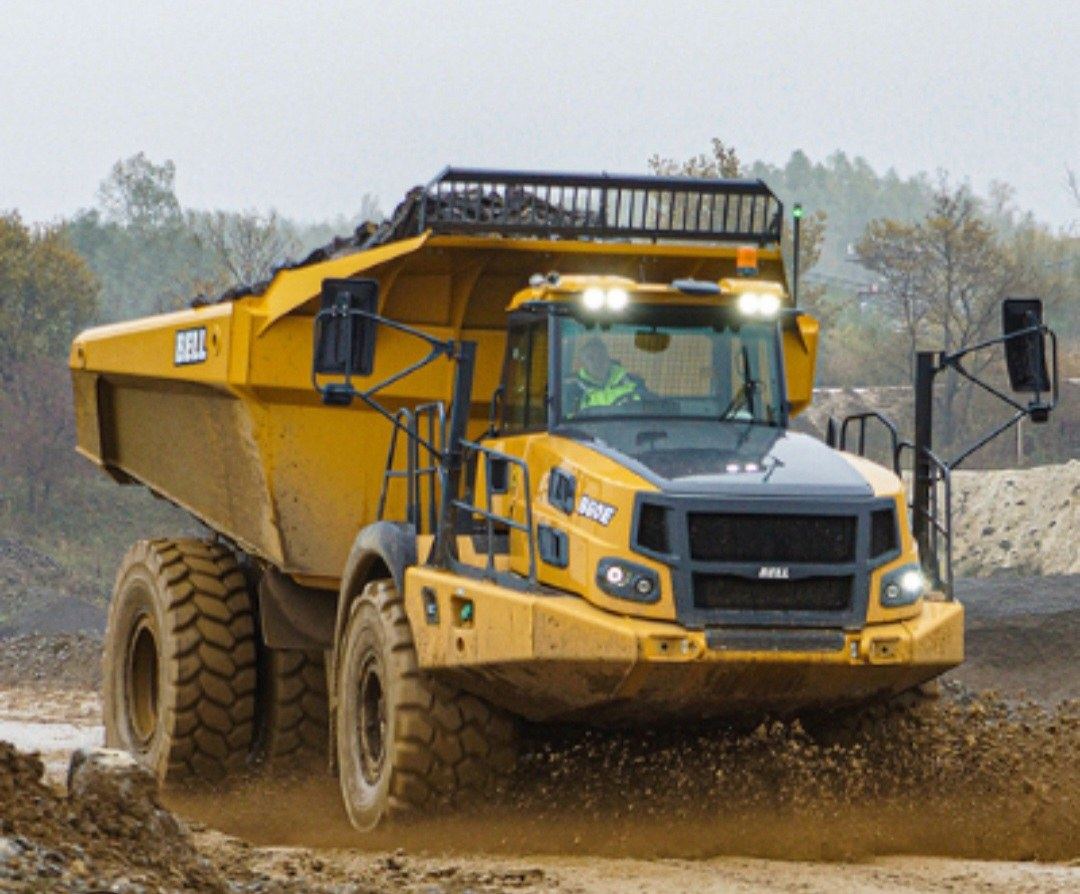
An articulated dump truck spends most of its shift doing something low risk: driving a haul road. The risk concentrates into the few seconds at the tip point, and that is where the expensive incidents happen.
A raised bin is a different machine
With the body down, an ADT is stable and forgiving. Raise a loaded bin and the centre of gravity moves a long way upward, and the machine becomes sensitive to things it would otherwise shrug off: a cross slope, soft ground under one side, material sticking in the bin and releasing all at once.
That is why the sequence matters. The truck has to be straight and settled on ground that will carry it before the body goes up, and the body has to come down before it moves off. A truck driving with a raised bin is the version of this that also takes out powerlines and overhead structures.
The tip edge, the berm and the spotter
Reversing to an edge is a blind manoeuvre. The berm exists so the machine has a physical stop rather than a judgement call, and it has to be built to a height that actually arrests a wheel rather than a token ridge of loose material.
The spotter exists because the operator cannot see what matters. That only works if the signals are agreed beforehand and the operator stops the moment they lose sight of the spotter, rather than continuing on the last instruction.
Ground at a tip point degrades through the shift. It was firm at the start and it has had loaded trucks on it since, so the condition that made it safe is the thing that changes.
Haul road discipline is the rest of it
Away from the tip, the incidents come from routine: right of way between loaded and empty trucks, following distance on a downgrade, blind rises, and what a full body does to braking distance on a wet road.
None of it is complicated. All of it is habit, which is why re-certification matters on machinery licences even for operators with years of seat time.
The paperwork that goes with the machine
An articulated dump truck sits under regulation 23 of the Construction Regulations, 2014, and on a mine under the Mine Health and Safety Act 29 of 1996 as well.
Regulation 23 requires the operator to be trained, certified competent and authorised in writing, to hold a medical certificate of fitness from an occupational health practitioner, and to inspect the vehicle daily. It also requires the plant to be maintained in good working order and fitted with protective structures against overturning and falling material.
What that adds up to is a trail as much as a skill: assessed competence on the machine type, a current medical, a written authorisation and a daily inspection record.
Sources
- Construction Regulations, 2014, Department of Employment and Labour
Legislation is summarised for orientation and is not legal advice. Always check the current text of the Act and its regulations, or take advice.
Written by
Ian van Eeden
Director, IMJ OHS Compliance Training (Pty) Ltd
Ian van Eeden is a director of IMJ OHS Compliance Training and the person behind the training content published on this site. He works with mining and heavy industry clients across South Africa, and IMJ delivers its programmes at the client operation rather than from a classroom.