
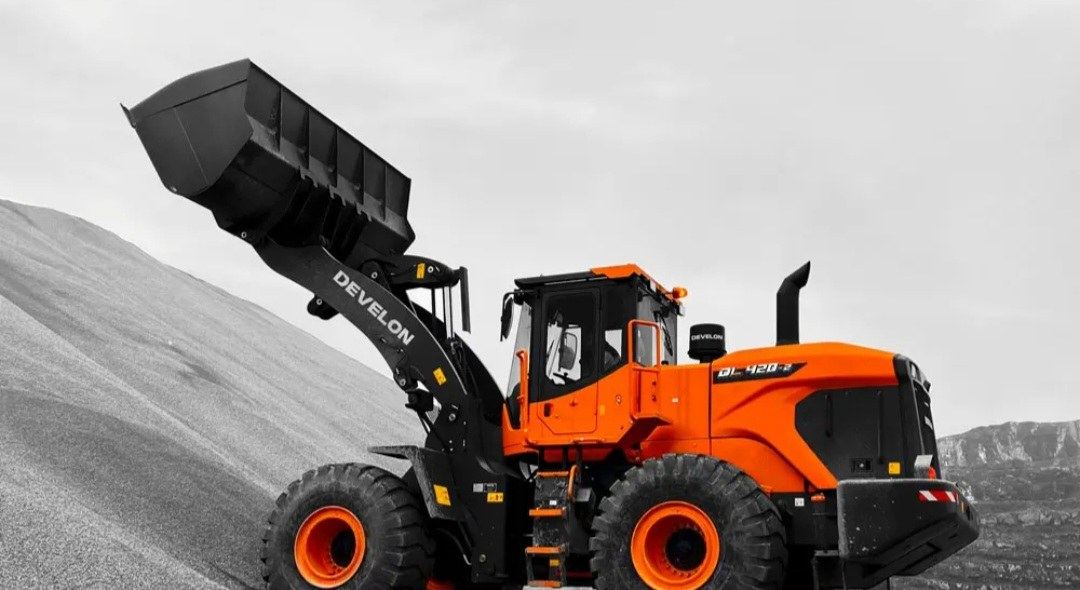
A front end loader is judged on production, and a stockpile is the fastest place to lose that discipline. Cutting into a face above safe reach leaves overhanging material with nothing under it, and the machine is parked directly beneath when it lets go.
How undercutting happens
Nobody sets out to undercut a face. It happens gradually, because the easiest material to reach is at the bottom and taking it is faster than working the pile down from the top.
Each pass removes support from the material above. The face stays standing because compacted material holds together far longer than it should, which is exactly what makes it dangerous: the pile looks stable right up to the moment it is not, and the collapse gives no warning worth the name.
The rule that prevents it is simple and unpopular under production pressure. Do not dig above the reach of the machine, and work a pile down rather than into.
Ground, slopes and drainage
The second failure is the ground the machine is standing on rather than the pile in front of it. Working across a slope instead of up and down it puts the centre of gravity where the machine cannot recover, and a loaded bucket raised high makes that worse.
V-drain and stockpile management is treated as housekeeping on most sites. It is not. Water cutting into the toe of a pile, or standing where machines turn, changes the ground conditions that everything else depends on.
What the law expects of the operator
A front end loader is construction vehicle and mobile plant under regulation 23 of the Construction Regulations, 2014. The operator must be trained, certified competent and authorised in writing to operate that plant, and must hold a medical certificate of fitness issued by an occupational health practitioner. The operator must also inspect the vehicle daily.
The contractor carries duties too. The plant must be of acceptable design and construction, maintained in good working order, and fitted with structures designed to protect the operator from being crushed if it overturns or from falling material. Against a collapsing stockpile face, that protective structure is the last line and not the first.
On a mine the Mine Health and Safety Act 29 of 1996 adds the employer's own duty to train employees for the work they do.
Sources
- Construction Regulations, 2014, Department of Employment and Labour
Legislation is summarised for orientation and is not legal advice. Always check the current text of the Act and its regulations, or take advice.
Written by
Ian van Eeden
Director, IMJ OHS Compliance Training (Pty) Ltd
Ian van Eeden is a director of IMJ OHS Compliance Training and the person behind the training content published on this site. He works with mining and heavy industry clients across South Africa, and IMJ delivers its programmes at the client operation rather than from a classroom.