
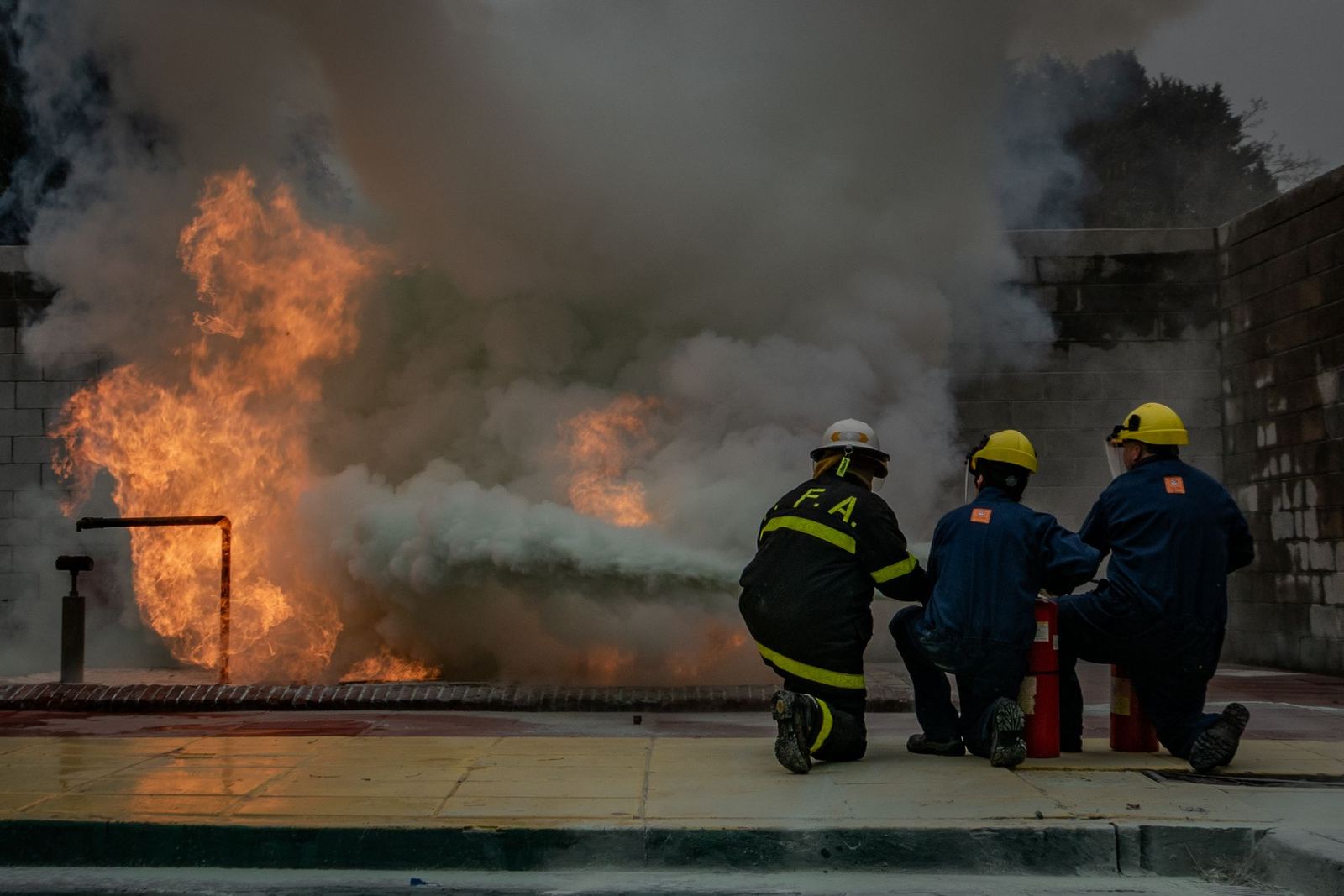
The instinct in the first seconds of a fire is to grab the nearest extinguisher. That instinct is right about acting quickly and wrong about the extinguisher, and on some fires it makes things considerably worse.
The classes, and why they exist
Fires are classified by what is burning. Class A is ordinary combustibles such as wood, paper and cloth. Class B is flammable liquids. Class C is flammable gases. Class D is combustible metals. Class F is cooking oils and fats.
The classification is not academic. It determines which extinguishing agent will work and which will make the situation dangerous, because the agents work by different mechanisms: cooling, smothering, starving the fire of fuel, or interrupting the chemical reaction.
The two that hurt people
Water onto an electrical fault is the first. Water conducts, and the person holding the extinguisher completes the path.
Water onto burning oil or fat is the second, and it is more violent than people expect. The water hits oil that is far above the boiling point of water, flashes to steam instantly, and throws burning oil out of the container and across the room. A kitchen fire that was contained becomes a room fire, and whoever was holding the extinguisher is standing in it.
This is why the fire class is taught before the extinguisher, and why a practical drill matters. Reading which extinguisher to use and having discharged one under supervision produce very different behaviour when an alarm goes off.
Equipment on the wall is not a control by itself
The Environmental Regulations for Workplaces, 1987, at regulation 9, require an adequate supply of suitable fire fighting equipment at strategic points, maintained in good working order. They also require at least two means of egress situated as far apart as is practicable, escape doors hung to open outwards, and exits kept clear and capable of being opened quickly from the inside.
That regulation gets you equipment and a way out. It does not get you a workforce that knows which unit to lift off the bracket. That gap is closed by training the people who work in the building, on the extinguishers that are actually on their walls.
Knowing when not to fight it
The most useful thing a fire course teaches is the decision to stop. If the fire is above head height, if it is between you and the exit, if the room is filling with smoke, or if the first extinguisher has not controlled it, the correct action is to leave, close the door behind you and raise the alarm.
Extinguishers are for small fires caught early. Deciding quickly that this is not one of those is what keeps people alive.
Sources
- Occupational Health and Safety Act 85 of 1993, Department of Employment and Labour
- Regulations made under the OHS Act, including the Environmental Regulations for Workplaces, Department of Employment and Labour
Legislation is summarised for orientation and is not legal advice. Always check the current text of the Act and its regulations, or take advice.
Written by
Ian van Eeden
Director, IMJ OHS Compliance Training (Pty) Ltd
Ian van Eeden is a director of IMJ OHS Compliance Training and the person behind the training content published on this site. He works with mining and heavy industry clients across South Africa, and IMJ delivers its programmes at the client operation rather than from a classroom.