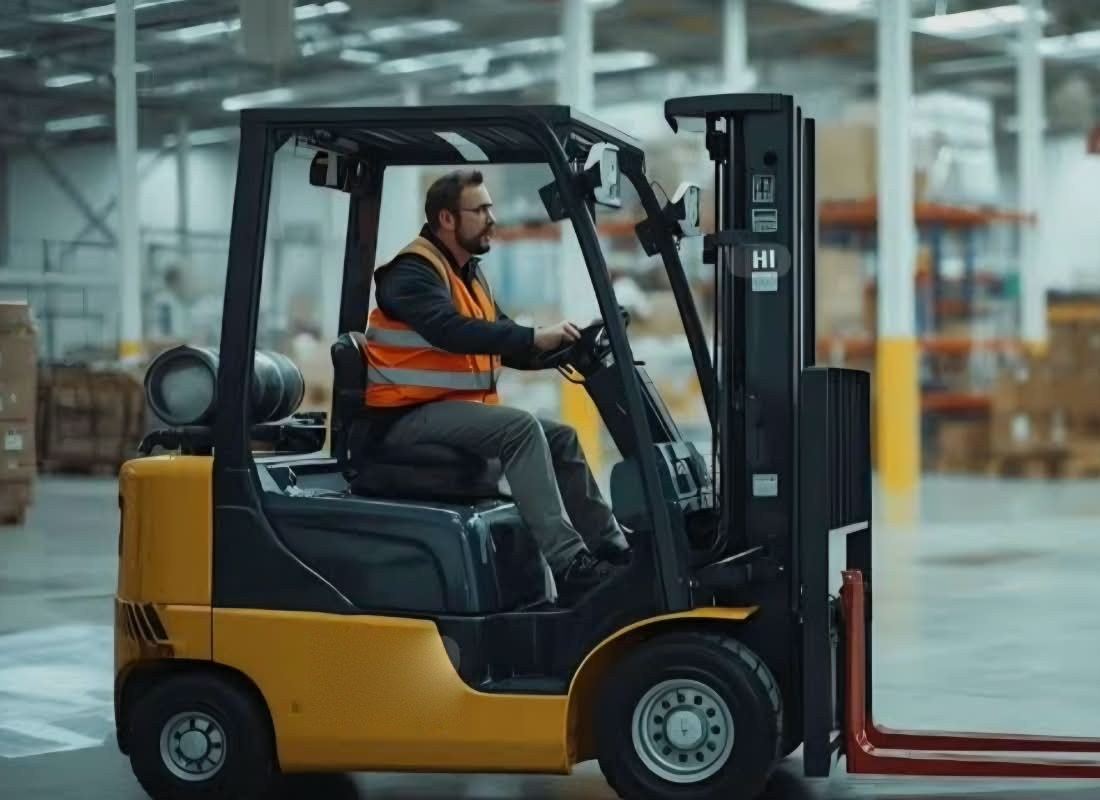
The pre-use inspection is the cheapest control on a forklift and the first one to disappear under production pressure. It takes about two minutes and it catches the faults that otherwise surface as a dropped load or a machine parked in the workshop for a week.
Why it is not optional
A forklift is a lifting machine under regulation 18 of the Driven Machinery Regulations, 2015. Regulation 18(11) requires that it is operated only by somebody specifically trained for that type of lifting machine, holding a certificate of training from a provider accredited by TETA under the National Code of Practice for Training Providers of Lifting Machine Operators.
The daily inspection is part of what that training makes the operator competent to do. An operator who has a valid licence but does not inspect the machine is only half the control the regulation intends.
What actually gets missed
Tyres, because a soft or damaged tyre changes the stability of the whole machine and is easy to walk past. Forks, specifically the heel where wear concentrates and cracks start. Chains and their anchor points. Hydraulic hoses and the tell-tale wet patch under the mast. The horn, the lights and the reversing alarm, which are the controls that protect pedestrians rather than the operator.
The seat belt is the one operators argue about most. In a tipping forklift, staying belted in the seat is the correct response, because the protective structure is designed to keep the space around you intact. Jumping clear is what produces the fatalities.
Make the defect easy to report
Inspections stop happening when reporting a fault costs the operator something. If flagging a defect means an argument with a supervisor about the production target, operators quietly stop finding defects.
A checklist that gets signed and handed in, a defect that gets a response the same shift, and a machine that gets tagged out when it needs to be. That loop is what keeps the inspection honest. Without it the checklist becomes a signature exercise, which is worse than nothing because it produces a paper trail that says the machine was fine.
Sources
- Driven Machinery Regulations, 2015, Department of Employment and Labour
Legislation is summarised for orientation and is not legal advice. Always check the current text of the Act and its regulations, or take advice.
Written by
Ian van Eeden
Director, IMJ OHS Compliance Training (Pty) Ltd
Ian van Eeden is a director of IMJ OHS Compliance Training and the person behind the training content published on this site. He works with mining and heavy industry clients across South Africa, and IMJ delivers its programmes at the client operation rather than from a classroom.